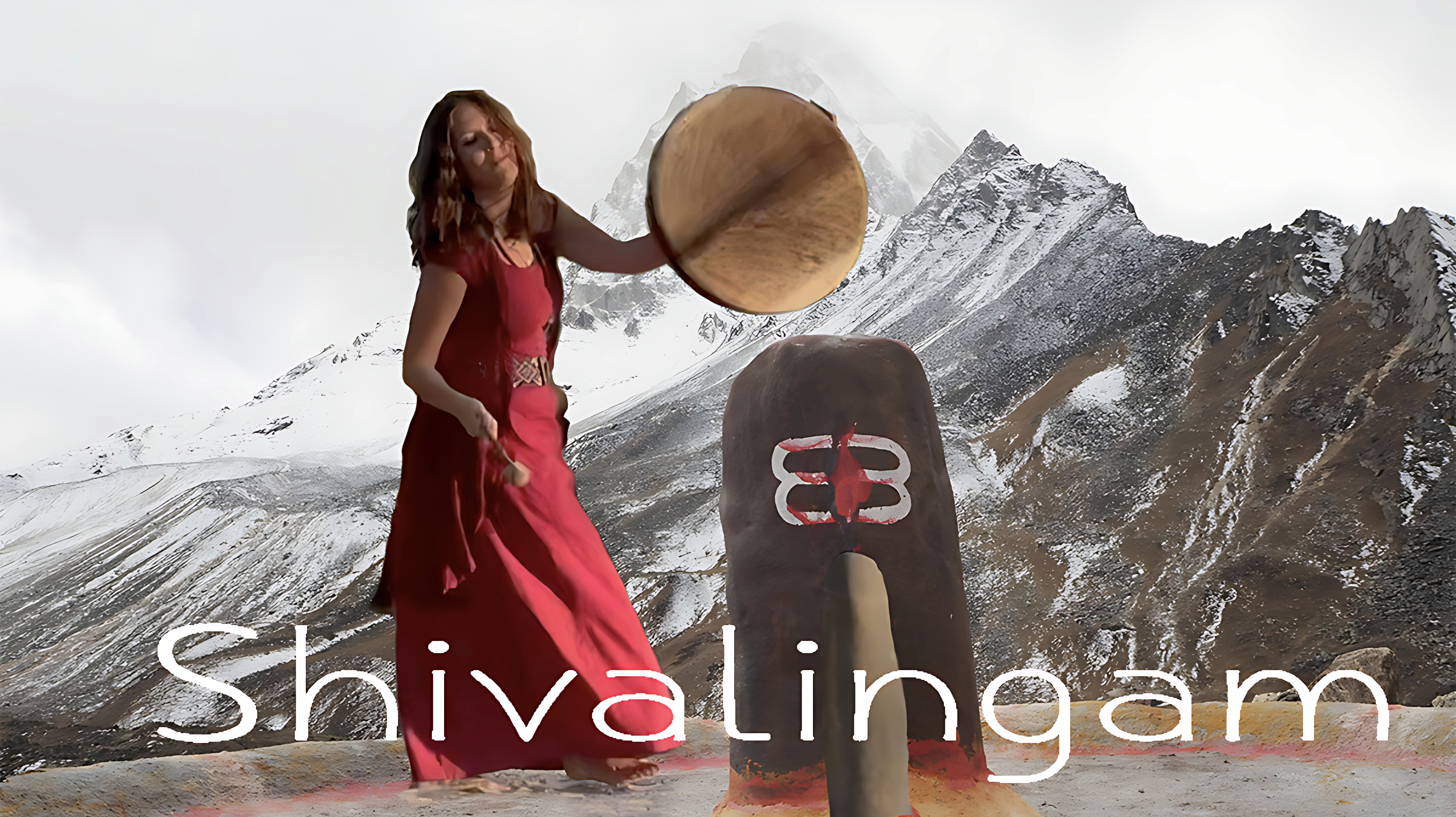
Recently, following the release of my latest song "Shivalingam," which features lyrics in Sanskrit, many have asked about the meaning of the mantras and what the Shivalingam represents. I'd like to share the philosophical significance behind it, to help avoid any common misunderstandings.
To begin with, the Sanskrit word linga means “distinguishing mark” or “characteristic.” While it can symbolically relate to masculine energy, its fundamental meaning is far broader. In its spiritual sense, a linga represents the subtle body or the axis of spiritual power. It is always paired with the yoni, which symbolizes the receptive, creative matrix of the cosmos. Together, they map the sacred interplay of consciousness and energy.
These primary Tantric icons are, in truth, the foundational geometry of existence itself, mapping the interplay of consciousness and energy from the microcosm of the individual to the macrocosm of the universe. On one level, they appear as opposites like the upward and downward-pointed triangles. The linga resting within the yoni, often seen as a standing stone in a ringed base, represents the union of cosmic masculine and feminine energies. This union is not merely sexual; it reflects universal polarities like sun/moon, fire/water, and electromagnetic forces that structure all of creation.

The Shiva linga as the ascending force of consciousness is ubiquitous in nature: in the peak of a mountain (like the iconic Shivling Peak in the Himalayas), the upward surge of a tree, the rising column of a thundercloud, or the erect human form. It is worshipped in the five elements as Bhuta Lingas (earth, water, fire, air, ether), and most famously as the Jyotirlingas which are twelve supreme manifestations of Shiva as pillars of scintillating light.

Thus, the worship of the linga is fundamentally the worship of the cosmic pillar (Stambha). This concept, found in Vedic texts as the Skambha that upholds the universe, is echoed in global traditions of obelisks, standing stones, and pyramids. It symbolizes Dharma - the eternal principle that upholds all order. Ultimately, this universal pillar finds its most intimate reflection in the human form: in the erect spine and the concentrated, one-pointed mind, through which individual consciousness can ascend to reunite with the undifferentiated light (Prakasha) of the absolute.